Chip Stocks Drop 12% as Software Rebounds in AI Trade Shift
12% July drawdown in the Philadelphia Stock Exchange Semiconductor Index is now the active-trader reference point for the AI rotation.
Garrett Croft·updated July 11, 2026
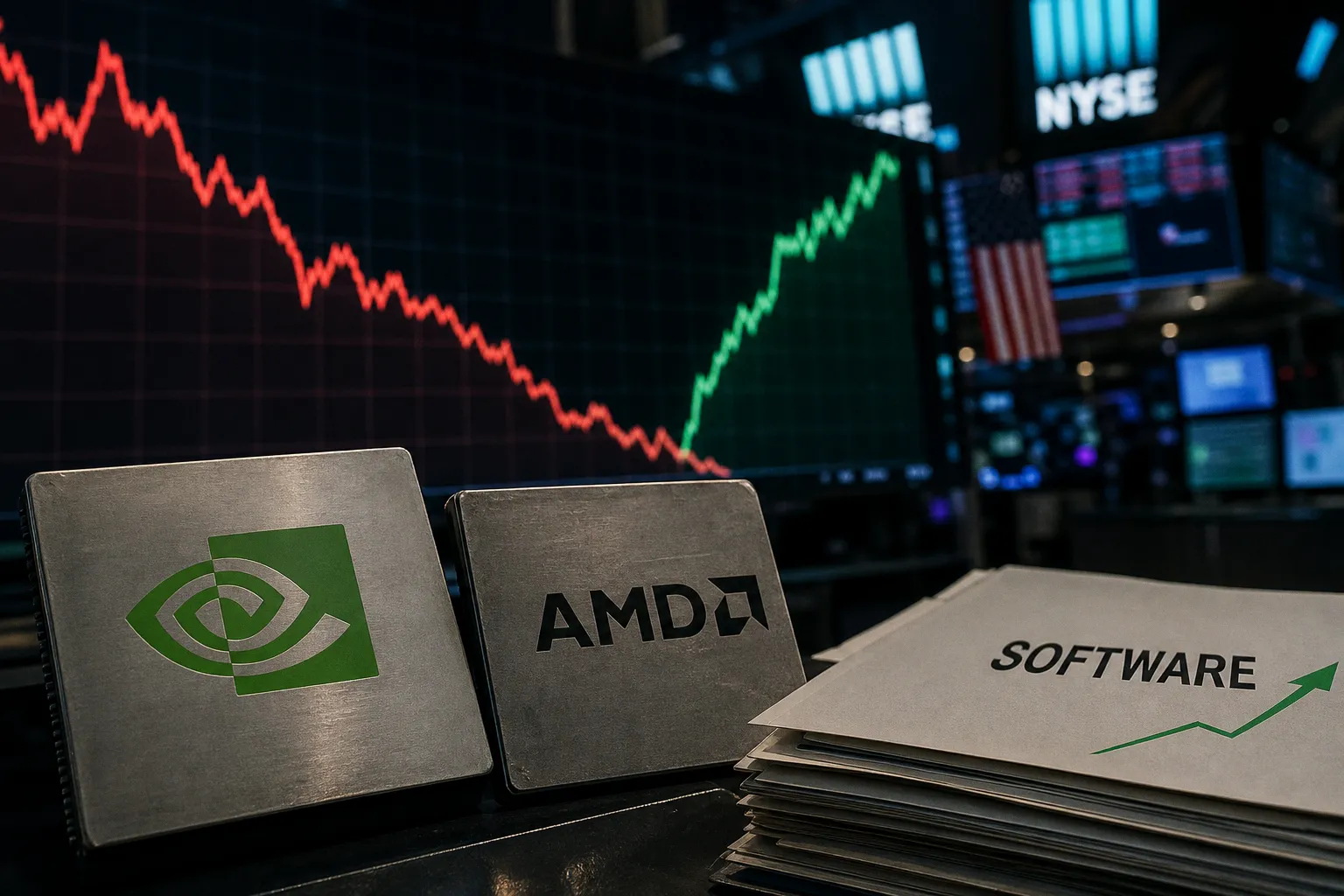
Rotation map: chips lose impulse, software compresses losses
The reported setup is specific.
- A widely followed software index is up 2.2% this month.
- Its year-to-date decline has narrowed to 12%.
- The Philadelphia Stock Exchange Semiconductor Index is down 12% in July.
- The same semiconductor index remains up 78% this year.
- The chip index is coming off its strongest quarter on record.
That creates a clean relative-strength spread: software is not in an confirmed broad uptrend from the supplied data, but it is outperforming chips on the current monthly window. For scalpers, this changes the default watchlist order. Semiconductor names may still provide range and volume, but the better directional impulse may no longer sit only in the chip basket.
The practical screen is simple:
1. Compare intraday relative strength of software leaders against the semiconductor ETF or index proxy.
2. Mark opening gaps in both baskets.
3. Avoid using prior-quarter chip momentum as the sole long-bias input.
4. Track whether software pullbacks hold VWAP while chip rebounds fail near prior intraday supply.
This is a flow problem, not a valuation conclusion.
Single-stock triggers: upgrades and failed chip response
The software side has fresh analyst support in the source material. Guggenheim upgraded Salesforce, ServiceNow, and Check Point Software Technologies. The stated argument: AI may still disrupt software, but the most negative view may be overstated. HSBC raised Adobe to buy from hold, with the view that investors may be overestimating the damage from AI-based design products.
Those names become event-driven tickers, not automatic longs. The execution checklist is narrower:
- Salesforce: monitor whether upgrade-driven demand sustains after the first liquidity sweep.
- ServiceNow: watch for continuation only if bid depth holds after the initial move.
- Check Point Software: treat cybersecurity exposure as a separate sub-basket, not a generic software proxy.
- Adobe: test whether the AI-design overhang repricing produces follow-through or only a one-session gap.
On the chip side, the tape is less responsive. Samsung Electronics delivered a strong earnings report, but the source says it did not trigger a rally. A Reuters report that China’s DeepSeek is developing its own AI chip helped pressure the semiconductor index by 4.7%.
For day traders, that matters because positive news failing to lift a group often reduces long setup quality. It increases the value of failed-breakout scans, lower-high structures, and short-window mean-reversion trades after gap attempts. It also raises slippage risk in crowded semiconductor names when headlines hit during regular hours.
Execution parameters: AI capex risk and positioning pressure
The broader AI trade is now carrying infrastructure-spending risk. Bloomberg News reported that Meta Platforms plans to sell access to its cloud operations to companies needing AI computing capacity. The source frames this as part of the concern that AI infrastructure expectations may have become stretched.
Positioning pressure is also in the data set. Michael Burry reportedly has short positions in Nvidia, Applied Materials, and the iShares Semiconductor ETF. That is not a trade signal by itself. It is a volatility input. It can increase headline sensitivity around Nvidia, semiconductor equipment, and basket-level products.
Earnings expectations remain split:
| Segment | Reported expectation |
|---|---|
| Semiconductor earnings growth in 2027 | 47% |
| Software and services earnings growth this year | 16.5% |
The numbers do not remove near-term rotation risk. They define the conflict: semiconductors still carry stronger expected growth in the supplied data, while short-term price action has shifted toward software stabilization.
Strict checklist for the next sessions:
- If software holds relative strength for more than one session, expand the software scan list.
- If semiconductor rebounds fail after positive catalysts, reduce breakout size.
- If chip ETFs gap down on AI-capex headlines, expect wider spreads and faster liquidity withdrawal.
- If software upgrades produce only opening spikes, classify the move as analyst-flow noise.
- If Nvidia, Applied Materials, or semiconductor ETFs lead downside, treat basket correlation as elevated.
Binary verdict: software is now the cleaner relative-strength monitor; semiconductors remain the higher-volatility execution venue. For scalping, that means tighter chip risk limits and more attention to software continuation patterns.