Option Bid-Ask Spread: Criteria for Go or No-Go Trades
An option contract can appear inexpensive while carrying a transaction cost large enough to distort the entire trade distribution.
Warren Hayes·Updated: July 16, 2026·13 min read
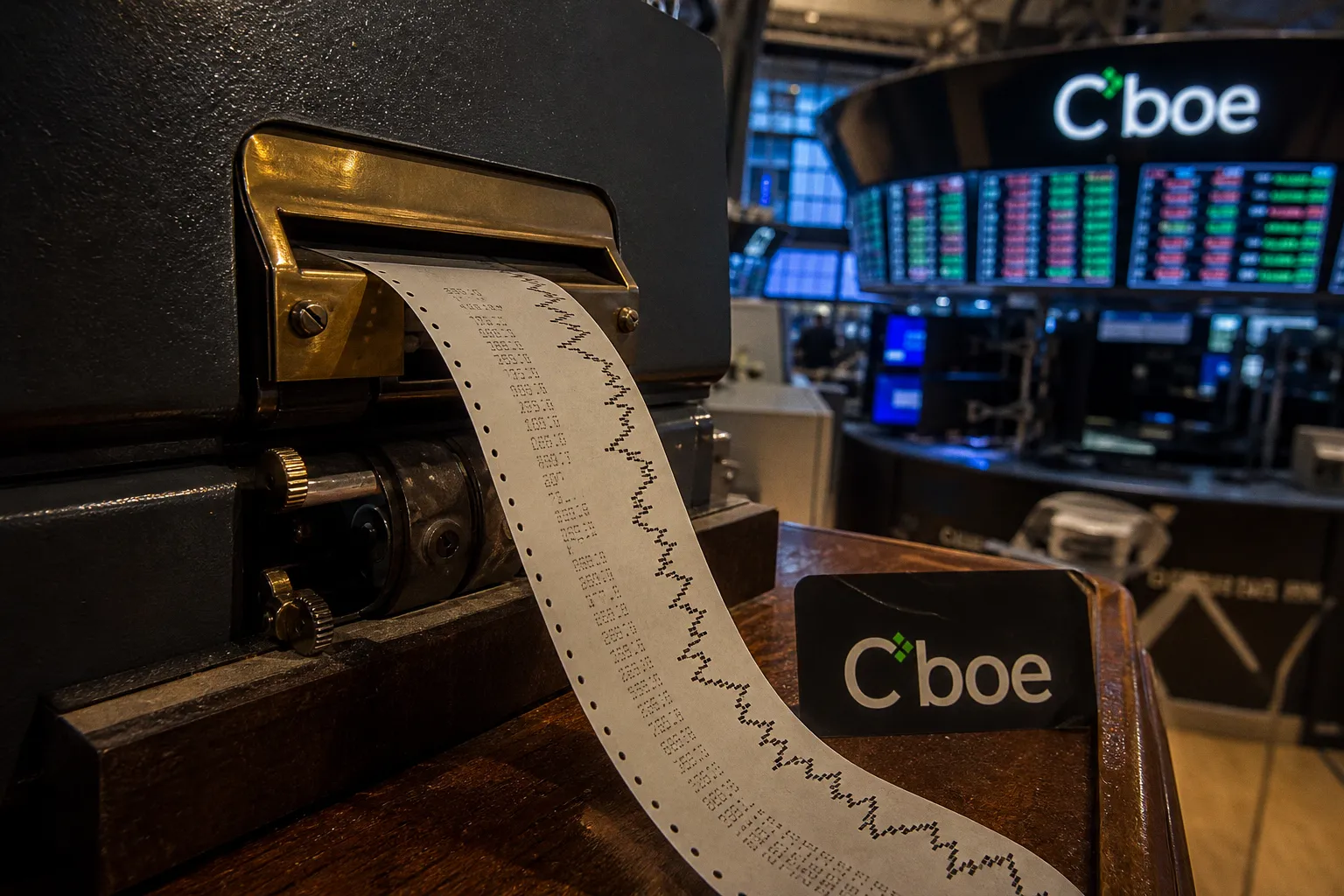
The option bid ask spread is therefore not simply a quote-board statistic. It is a compact reading of available liquidity, market-maker inventory tolerance, adverse-selection risk, and the probability that a theoretical edge survives contact with the order book. When spreads widen while the underlying remains active, the market is often signaling a structural imbalance rather than offering an overlooked opportunity.
The mechanics of transaction cost and slippage
The bid is the highest displayed price currently available to sell an option. The ask is the lowest displayed price available to buy it. Their difference is the quoted spread.
For a trader who buys at the ask and later sells at the bid without any change in the option’s fair value, the round-trip cost is approximately the full quoted spread. That is the immediate friction embedded in crossing the market twice.
Consider two contracts:
| Contract | Bid | Ask | Midpoint | Quoted Spread | Spread as % of Ask |
|---|---|---|---|---|---|
| Liquid contract | $2.48 | $2.52 | $2.50 | $0.04 | 1.6% |
| Thin contract | $0.90 | $1.10 | $1.00 | $0.20 | 18.2% |
The first contract begins close to its midpoint. A modest move in the underlying, or a small shift in implied volatility, can plausibly overcome the execution deficit. The second begins materially underwater. Even if the trader obtains a midpoint fill, the displayed width indicates that liquidity providers see meaningful uncertainty in the contract’s value or in their ability to hedge it.
This is where nominal dollar spreads mislead. A $0.10 spread can be acceptable on a $10 option and prohibitive on a $0.50 option. The relevant measure is not only the number of cents between bid and ask, but the width relative to the premium being committed.
For short-horizon trading, the distinction becomes sharper. An intraday directional position may target a limited delta-driven move. If the spread absorbs a substantial share of that expected move, the trade requires unusually favorable timing simply to reach breakeven. The trader is no longer evaluating the underlying’s direction alone. They are underwriting the market maker’s compensation for warehousing risk.
A spread is not a static fee. It is the market’s current price for uncertainty, inventory risk, and the right to trade immediately.
Slippage extends beyond the visible width. A quoted bid or ask may represent limited displayed size, while the intended order may consume that size and force execution through several price levels. In active names and heavily traded index ETFs, this effect can be modest. In farther-dated, deep out-of-the-money, or event-sensitive contracts, it can be the entire trade.
The displayed spread should therefore be read alongside:
- Displayed size at bid and ask. A one-cent spread with one contract displayed on each side is not equivalent to a one-cent spread supported by substantial size.
- Underlying liquidity. A liquid stock or ETF gives market makers a more reliable hedge. A widening option market in a stable, liquid underlying is more informative than the same width in a fast-moving, thin underlying.
- Strike and expiration location. Near-the-money contracts with conventional expirations usually concentrate the deepest liquidity. Far strikes and unusual maturities often sit outside that institutional footprint.
- Quote stability. Quotes that repeatedly vanish, resize, or reprice as an order approaches indicate fragile liquidity, even if the snapshot spread appears narrow.
- Time of day. Open and close bring volume, but not always orderly liquidity. The first minutes after the opening auction and the period around scheduled catalysts can generate wide, rapidly changing markets.
Defining the go/no-go thresholds for liquidity
The most useful options spread size rules are percentage-based because they normalize the cost across premium levels. They are not universal laws. They are decision filters: a way to reject structurally poor contracts before a trade thesis turns into an execution problem.
A practical hierarchy is clear.
| Spread as % of option value | Liquidity reading | Execution implication |
|---|---|---|
| Under 2% | Highly liquid | Usually suitable for active execution, subject to depth and quote stability |
| 2% to 5% | Generally acceptable | Tradable, though limit-order discipline matters |
| 5% to 10% | Conditional | Requires a stronger catalyst, wider expected move, or longer holding horizon |
| Above 10% | Functionally illiquid for most short-horizon trades | Usually a no-go because slippage dominates the expected edge |
The percentage is commonly calculated by dividing the quoted spread by the option’s ask price or by a representative option value near the midpoint. Consistency matters more than the specific convention. If an analyst uses the ask as the denominator, the metric reflects the cost of entering a long position relative to the capital committed. If the midpoint is used, it measures the spread against an estimate of fair value. Both can be useful; neither should conceal a wide market.
For example, an option quoted $1.96 bid and $2.00 ask has a $0.04 spread. Relative to the $2.00 ask, that is 2%. The contract sits at the boundary of a highly liquid classification. By contrast, a $0.20 bid and $0.25 ask has a $0.05 spread, also five cents, but the spread is 20% of the entry price. Treating those contracts as comparable because each has a nickel-wide market is a category error.
The under-2% range is particularly relevant for bid ask spread options scalping. Short-duration strategies tend to realize smaller gross price changes and depend more heavily on efficient exits. A contract that costs 6% to enter and exit can still be profitable, but the required underlying move must be meaningfully larger, faster, or more certain than the same setup in a 1% to 2% market.
The 2% to 5% range is more nuanced. It can accommodate trades in contracts where the underlying has a defined catalyst, where the option has sufficient displayed depth, and where the trade horizon allows for a measured exit. But it is not a license to use market orders indiscriminately. A contract quoted at a 4% spread can still execute efficiently if the midpoint is repeatedly available. It can also produce poor fills if the quote is cosmetic and the book is thin.
Above 10%, the statistical burden rises sharply. The contract may still generate a profit if the underlying makes a sufficiently large move. Wide spreads do not guarantee losses. They do, however, reduce the margin for analytical error and convert execution into a second directional bet. The market must move not only in the anticipated direction, but far enough to overcome the liquidity void between displayed buyers and sellers.
A narrow spread is useful only when it is executable
Evaluating options liquidity requires more than applying a percentage threshold to one screen capture. A bid-ask spread can narrow briefly during a burst of displayed quoting and then reopen when actual demand arrives. The distinction between a tradable market and a merely quoted market becomes visible in execution behavior.
The midpoint is the first reference point. It is calculated as:
Midpoint = (Bid + Ask) / 2
For a contract quoted $3.40 by $3.50, the midpoint is $3.45. If a buy order receives a fill at $3.46, execution was close to the center of the displayed market. If the fill occurs at $3.50, the trader crossed the full half-spread from midpoint to ask.
The effective spread captures this realized execution cost:
Effective Spread = 2 × |Trade Price − Midpoint|
Using the $3.40 by $3.50 example, a buy fill at $3.46 yields an effective spread of $0.02. A fill at $3.50 yields an effective spread of $0.10, equal to the full quoted spread. The formula is valuable because displayed spreads and realized trading costs frequently diverge.
A tight quoted market with repeated fills at or near the midpoint is a stronger liquidity signal than a similarly narrow market that only fills at the displayed ask for buyers and bid for sellers. The first suggests competitive liquidity provision. The second suggests that the midpoint is informational, not executable.
This distinction matters particularly around VWAP-driven moves in the underlying. When a liquid stock is rotating around volume-weighted average price, near-the-money options can remain tightly quoted because hedging flows are orderly and continuous. When the stock breaks through a major intraday level on abrupt volume, option quotes may remain displayed but cease to be reliable. The book reprices faster than the human eye can assess it.
A disciplined execution sequence is therefore preferable to a single spread test:
1. Measure width relative to premium. Reject contracts where the spread already consumes an unreasonable share of the expected move.
2. Inspect top-of-book size and nearby levels. A narrow market with limited size can disappear under a modest order.
3. Use the midpoint as a reference, not an entitlement. Test price discovery with a limit order rather than assuming the midpoint is available.
4. Observe quote behavior during the underlying’s move. A contract that holds its market through a directional impulse is more robust than one that widens instantly.
5. Reassess the exit before entering. Entry liquidity and exit liquidity are not interchangeable, especially after volatility expands.
The last point is often neglected. A trader may enter a contract when the underlying is calm and the spread is narrow, then seek to exit during the very volatility event that made the position profitable. At that moment, market makers can widen quotes because hedge costs rise and adverse-selection risk becomes acute. The trade may be correct on direction but inefficiently monetized.
The relevant spread is not the one visible at entry. It is the spread likely to exist when the position needs to be closed.
Quoting increments shape the order book
Minimum price increments set the granularity of competition in the option market. They do not create liquidity by themselves, but they determine how precisely market participants can improve a quote.
Under the Penny Interval Program, options in participating classes trade in one-cent increments when priced below $3.00 and in five-cent increments when priced at or above $3.00. The program originated as the Penny Pilot in 2007 and was made permanent in 2020.
Certain highly liquid ETFs, including SPY, QQQ, and IWM, trade in $0.01 increments across price levels. Their option markets often show the clearest benefits of granular pricing: tighter displayed spreads, frequent midpoint interaction, and an institutional footprint distributed across a deep set of strikes and expirations.
Options outside the program revert to wider standard increments:
| Option series status | Premium below $3.00 | Premium at or above $3.00 |
|---|---|---|
| Penny Interval Program participant | $0.01 increment | $0.05 increment |
| Non-program option class | $0.05 increment | $0.10 increment |
| SPY, QQQ, IWM | $0.01 increment | $0.01 increment |
The practical consequence is straightforward. A $3.05 option trading in a five-cent increment regime cannot display a $3.04 bid or a $3.06 ask. The smallest possible quoted market may be $3.00 by $3.05. That five-cent width is only about 1.6% of the ask and is not inherently problematic. But the increment becomes more consequential when premium is low or liquidity is fragmented.
A non-program contract quoted $0.20 by $0.25 is constrained by a five-cent tick, producing a 20% displayed spread even before considering actual market-maker risk. Here, the tick regime and the underlying liquidity condition interact. The spread is wide not merely because market makers are uncompetitive, but because the market’s permitted quoting grid is coarse relative to the contract’s value.
This is why traders should not infer too much from cents alone. A five-cent market can be structurally tight for a higher-priced contract and structurally prohibitive for a low-premium option. The correct unit of analysis remains percentage width, combined with depth, execution quality, and the contract’s tick structure.
Market makers price uncertainty, not just inventory
Option spreads are set through exchange order books and market-maker quoting behavior, not by brokers. Liquidity providers continuously balance the expected value of providing immediacy against the risk that an incoming order contains superior information.
That risk increases when the underlying becomes difficult to hedge. A market maker quoting a call option can hedge directional exposure by trading the underlying, but the hedge is dynamic rather than static. When price moves rapidly, volatility jumps, or correlations break down, the cost of maintaining that hedge rises. The displayed option spread widens in response.
Several conditions tend to produce this widening:
- Scheduled catalysts. Earnings, central-bank decisions, inflation data, and other known events raise the probability that the underlying will gap or reprice abruptly.
- Volatility compression followed by release. A narrow range can create the appearance of stable liquidity. When the range breaks, option markets often reprice before displayed depth adjusts.
- Order-flow asymmetry. Persistent demand for calls or puts at one strike can force market makers to manage concentrated inventory and hedge pressure.
- Fragmented strike liquidity. Volume may be substantial in the option complex while a specific strike or expiration remains thin.
- Rapid changes in implied volatility. The option’s value can move even when the underlying pauses, especially in contracts close to expiration or around an event catalyst.
Exchange rules impose maximum bid-ask differentials on market makers to support orderly markets. In certain option classes, a general maximum permissible width can be $5.00. These limits are guardrails, not liquidity guarantees. A spread can comply with exchange requirements while remaining economically unusable for an active strategy.
Moreover, during a declared Fast Market, maximum spread requirements can double. This is a necessary accommodation to stressed conditions, but it changes the meaning of every displayed quote. The market is explicitly acknowledging that normal two-sided liquidity has deteriorated. A trade that met a 2% or 5% threshold minutes earlier may no longer be evaluated through the same framework.
The critical error during these intervals is to interpret a wider spread as delayed pricing. It may instead reflect a rational repricing of hedge uncertainty. The liquidity provider is not simply charging more for the same service; the service itself has become more difficult to provide.
From spread filter to execution discipline
The option bid ask spread should be treated as a precondition for a trade, not as a secondary field examined after the directional thesis is built. An attractive chart pattern in the underlying cannot neutralize an inefficient contract. It can only compensate for it through a larger realized move, which raises the threshold required for the idea to work.
For liquid, high-turnover option classes, the default should be demanding: spreads near or below 2%, stable displayed size, and evidence that execution can occur near the midpoint. In moderately liquid contracts, a spread below 5% may remain acceptable if the expected holding period and catalyst justify it. Once the width approaches 10%, the trade is no longer primarily a view on price direction. It becomes a wager that future liquidity will be better than current liquidity.
That distinction alters statistical probabilities. Narrow, stable spreads preserve more of the underlying signal. Wide, unstable spreads add a second source of variance at entry and exit, reducing the reliability of any setup measured solely through chart structure or directional conviction.
The practical conclusion is not that every wide contract must be avoided. It is that liquidity must be priced into the thesis with the same rigor applied to delta, implied volatility, and time decay. In options markets, execution quality is not an operational detail after the analysis. It is part of the analysis.