Why AI Stock Rallies Are Likely Traps for Intraday Traders
CNBC analysis indicates current upward moves in AI-related equities constitute a technical bounce within a broader downtrend.
Garrett Croft·updated July 23, 2026
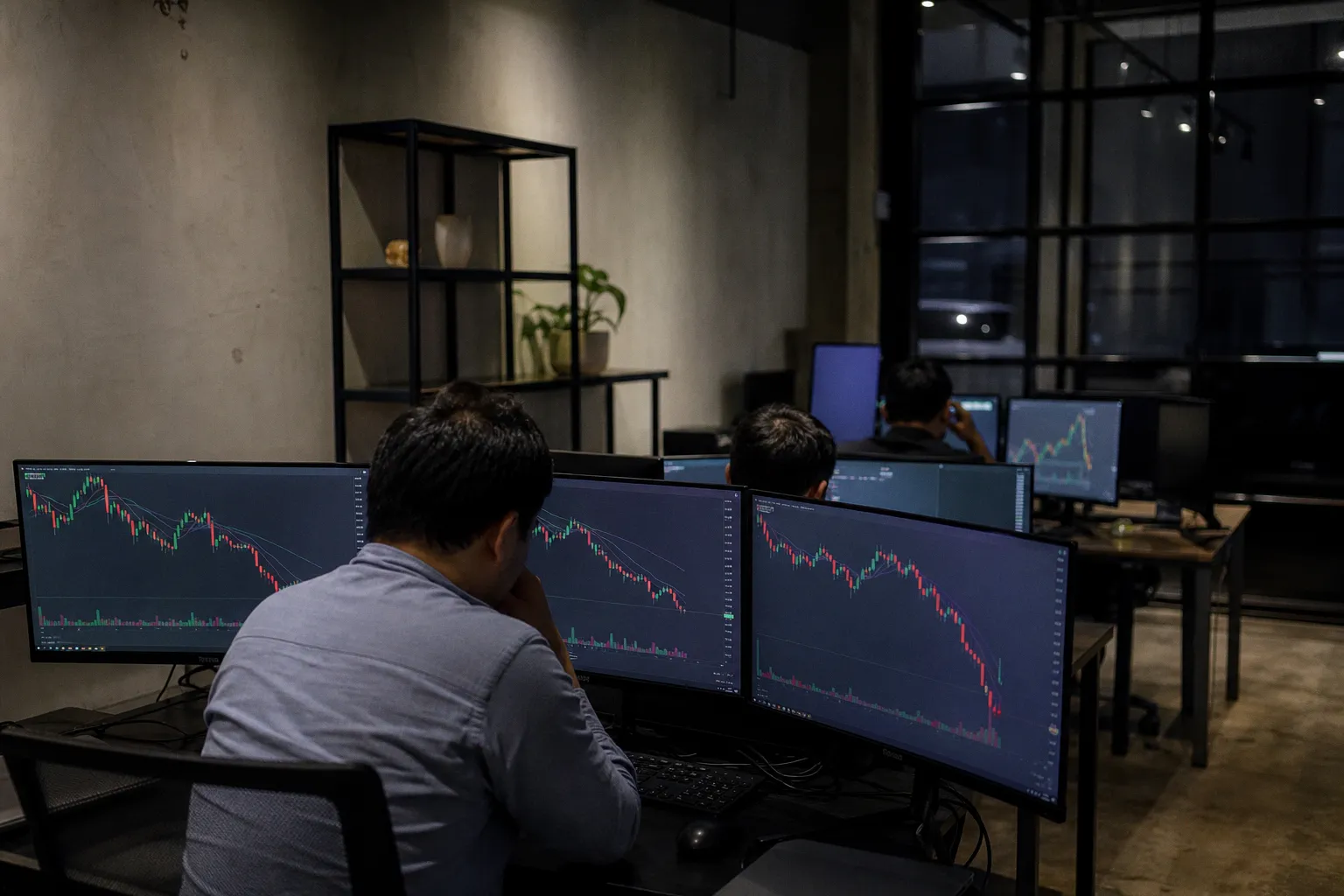
Concurrent data confirms a 6.10% single-session decline in Palantir Technologies (PLTR), dropping to $124.57, reinforcing bearish chart patterns. This signals potential continued downside pressure, a critical condition for intraday strategies.
Chart Structure Overrides Short-Term Price Action
CNBC's technical assessment identifies recent rallies in AI stocks as corrective bounces, not trend reversals. This aligns with classical pattern recognition where a lower-high formation on the daily chart precedes further downside. The 6.10% drop in PLTR, reported by Smartkarma, provides a live data point illustrating this selling pressure. For scalpers, this environment elevates the win rate of short-biased setups on failed rallies but increases slippage risk during high-volatility sessions.
Market Context: Operating in a Navigational Uncertainty Phase
Investor's Business Daily frames the current period as one of "Navigating Uncertainty." This contextualizes the individual stock moves within a broader, cautious market regime. For algorithmic systems, this phase typically manifests as increased mean-reversion and reduced trend-following efficacy. API limits and execution latency become more impactful when market direction lacks conviction.
Parameters for Platform & Strategy Configuration
- Bias: Intraday bias leans short on rallies into identified resistance levels on affected AI equities.
- Timeframes: 1-minute and 5-minute charts for execution timing; daily chart for structural bias.
- Volatility Metrics: Monitor Average True Range (ATR) expansions following the PLTR 6.10% drop; adjust position sizing to accommodate.
- Stop-Loss Discipline: Tighten stops on long positions. Maximum allowable drawdown per trade should be predefined and adhered to strictly.
- News Catalysts: Treat all "bounce" narratives with skepticism until price action confirms a structural break of the current downtrend.